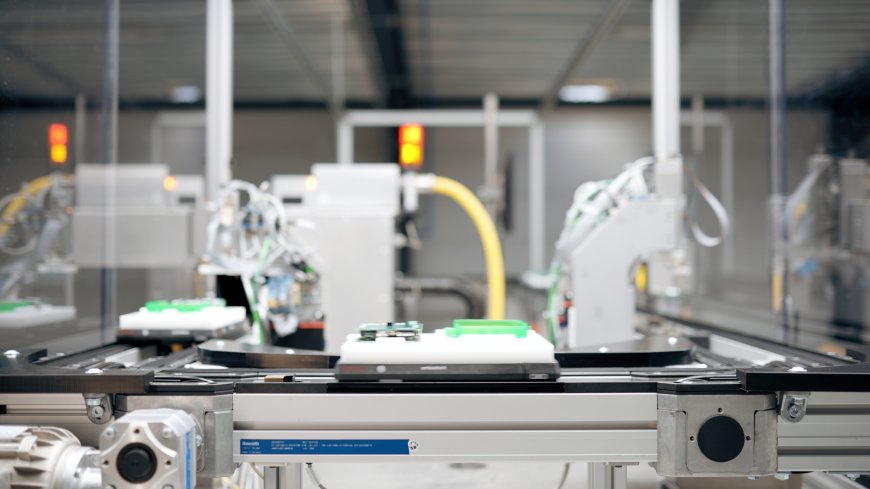
Production organizations are under constant pressure to operate more efficiently. Rising costs, limited availability of technical personnel, and increasing demands for quality and delivery reliability make optimization essential. Efficiency is not just about producing faster; it is about the structural improvement of processes.
In practice, this means: less downtime, less waste, and better utilization of people, machinery, and energy.
Cost savings begin with process insight
Cost savings are often a direct result of better process control. By gaining insight into where losses occur — such as unplanned downtime, manual interventions, or inefficient material flows — targeted improvements can be implemented.
Automation plays a key role here. Examples include:
- Reducing manual and repetitive tasks
- Lowering energy consumption
- Limiting failure costs and rework
These interventions lead to lower operational costs and a more stable production process.
ROI: looking beyond the individual machine
However, efficiency and cost savings do not tell the whole story. For sustainable improvement, it is essential to look at Return on Investment (ROI) — and not just at the machine level.
ROI manifests at two levels:
1. ROI at the machine and asset level
Investments in automation and modern production technology often yield direct, measurable benefits, such as:
- Reduced maintenance and unplanned downtime
- Higher uptime
- Shorter cycle times
- Better and more consistent product quality
This results in higher output and better utilization of existing assets.
2. ROI across the entire production chain
The greatest gains are often found not in a single machine, but in the synergy of the total production process. Optimization of logistics, labor efficiency, material flows, and data exchange ensures structural improvements.
By combining automation, process optimization, and system integration, a production environment is created that is not only more efficient but also more scalable and manageable.